
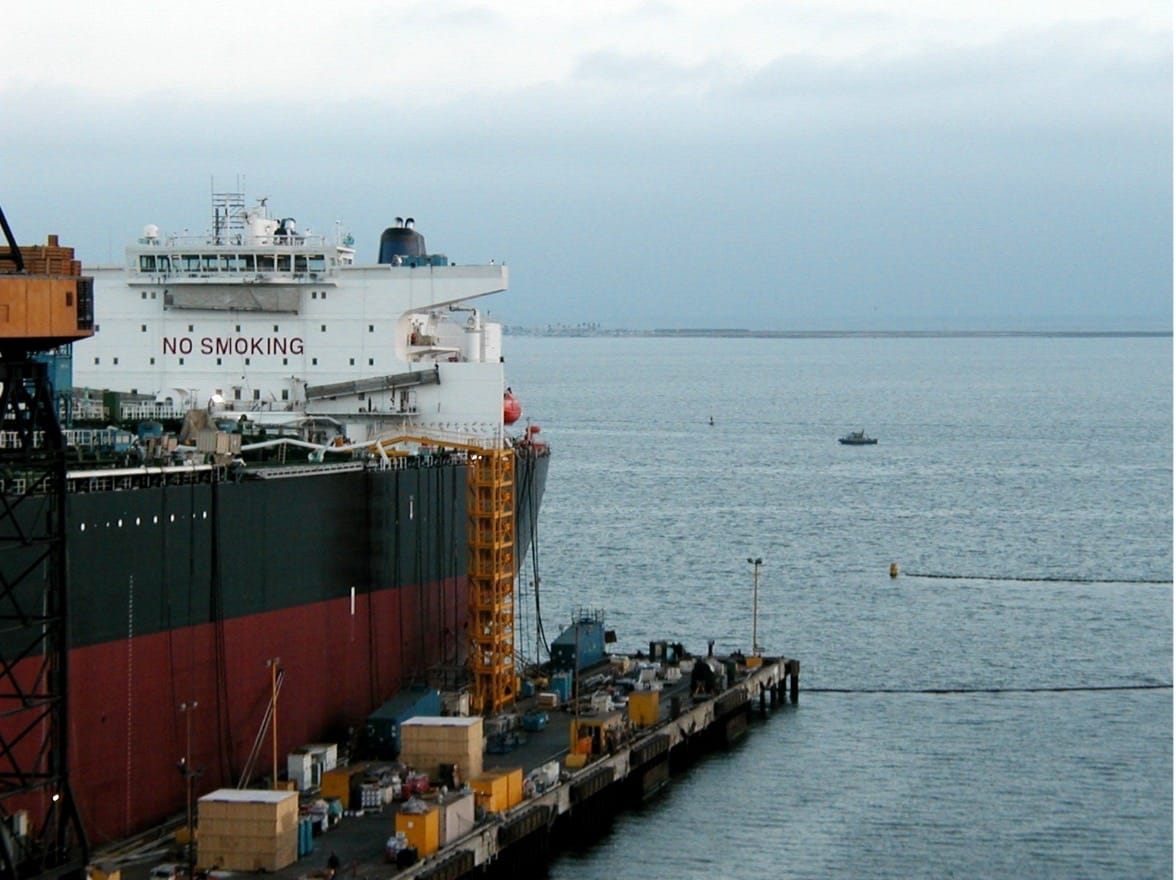
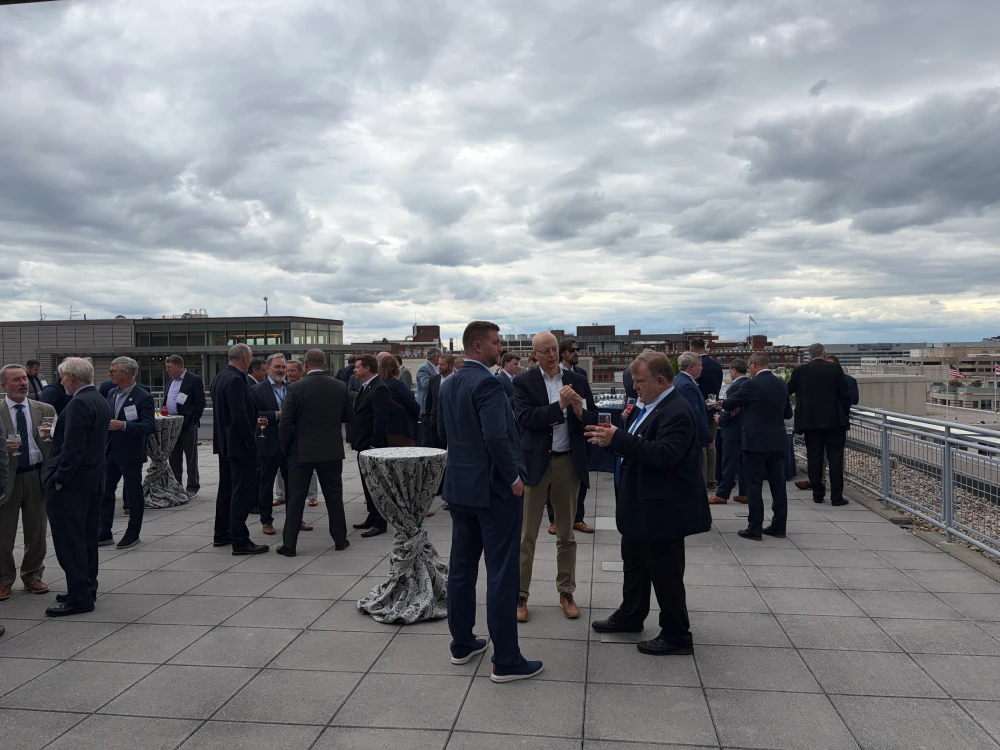
Last week, I attended the Shipbuilders Council of America spring meeting in Washington, D.C. The Thursday agenda was packed with presentations from members of Congress, Navy and Coast Guard acquisition leaders, and senior officials shaping the future of American shipbuilding.
The message coming out of D.C. was consistent and urgent: the U.S. needs to build ships faster, and the industrial base that supports shipbuilding needs to grow with it. Here are the takeaways that matter most for our customers, partners, and the broader marine supply chain.
Who was in the room
The Thursday agenda included a deep bench of decision-makers and policy leaders:
- Congressman Rick Larsen, Lead Democrat, House Transportation & Infrastructure Committee
- Senator Mark Kelly, Sponsor of the SHIPS for America Act
- Senator Todd Young, Commerce, Science & Transportation Committee; Co-Sponsor of the SHIPS for America Act
- Congressman Joe Courtney, House Armed Services Committee
- Congressman Mike Ezell, Subcommittee on Coast Guard and Maritime Transportation
- Mr. Jason Potter, Performing duties of Assistant Secretary of the Navy (Research, Development and Acquisition)
- Ms. Amber Stein, Program Executive Officer and Chief Engineer for Coast Guard Acquisition
- Mr. Christopher Miller, Portfolio Acquisition Executive, PAE Maritime
- Mr. Eric Labs, Congressional Budget Office, National Security Division
- Rear Admiral Chad Cary, Director, NOAA Commissioned Officer Corps
- Dr. Henry Mack, Assistant Secretary of Labor
That’s a meaningful cross-section of the people who will be writing the checks, writing the legislation, and managing the acquisition programs that drive the next decade of U.S. shipbuilding.
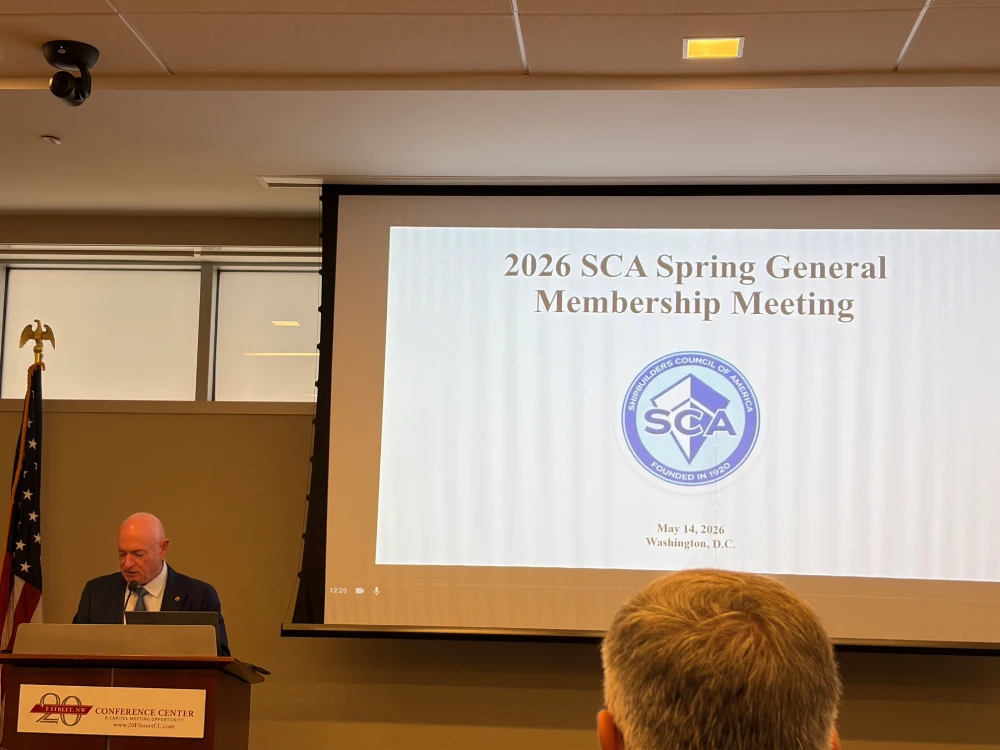
The headline: speed is the priority
If one theme cut through every presentation, it was speed. The Navy and Coast Guard need ships delivered faster, and they are openly acknowledging that the current pace of acquisition and construction is not sustainable for either national defense or economic security.
The U.S. is a maritime nation with two long coastlines and more than $5 trillion in trade flowing through its ports each year. The shipbuilding capacity required to support that economy, and to defend it, is well behind where it needs to be. Revitalizing the industrial base is no longer a long-range aspiration. It is being framed as a near-term necessity.
Distributed shipbuilding: the model the government is pushing
A term that came up repeatedly across multiple presentations was distributed shipbuilding. It’s worth understanding because it represents a real shift in how the Navy and Coast Guard are thinking about ship construction, and it opens doors for companies across the supply chain.
The concept works like this: a lead shipyard holds the contract and assembles the final vessel, but pre-fabricated modules, sometimes already outfitted with HVAC, controls, machinery, and other systems, are built concurrently at smaller or commercial shipyards and delivered to the lead yard for integration. Instead of one yard carrying the entire build sequentially, multiple facilities work on different sections at the same time.
Historically, large shipyards have been reluctant to share work outside their own walls. The government’s pitch is straightforward: yards that participate in a distributed model will see more total work over time because the program of record grows faster. Whether that fully resolves the protective instincts of the prime yards remains to be seen, but the signal from acquisition leadership is clear. They want to see the industry collaborate.
For companies that supply controls, mechanical systems, and outfitting work to the shipbuilding industry, this is a meaningful opportunity. As more yards, including commercial yards that have not traditionally done new Navy or Coast Guard construction, participate in module fabrication, the demand for capable, qualified suppliers grows with them.
Acquisition reform is on the table
Several speakers acknowledged that the government itself is more than half of the speed problem. To their credit, they were willing to say so publicly, and several reforms are being discussed or implemented to address it:
- Centralizing authority for acquisition decisions to reduce delays caused by fragmented approval chains
- Eliminating changes to requirements after contract award, which has historically been a major driver of schedule slips and cost growth
- Redefining “technically acceptable” to allow acquisition of ships that meet most operational needs without driving up cost through extensive non-recurring engineering. For example, accepting a design that delivers 85% of the desired capability if it can be built quickly with proven engineering.
These changes, if they hold, would meaningfully reshape how programs move from concept to delivery.
What’s on the order book
The pipeline ahead is substantial:
- The Navy has released a new 30-year shipbuilding plan with a significant planned ramp in acquisition over the next three years. Many of the ships in this near-term wave are not high-end combatants, meaning there is opportunity across a broader range of vessel types and yards.
- The Coast Guard is targeting 90 new ships between now and 2034, including icebreakers, multiple classes of security cutters, and smaller vessels.
Workforce: the constraint nobody can ignore
Shipbuilding wages were also flagged as a structural problem. Current pay for shipyard labor is comparable to less demanding jobs available in the broader U.S. workforce, which makes it difficult to attract and retain the skilled tradespeople the industry needs to actually execute on the planned ramp. This is a constraint that no acquisition reform or distributed model can solve on its own, and it was raised as a national priority across multiple presentations.
What it means for the supply chain
For companies like ACS that design and build controls and mechanical systems for marine and defense applications, the picture coming out of D.C. is encouraging in the broad strokes:
- More ships on the order book means more work flowing through the supply chain.
- A distributed shipbuilding model means more yards, including commercial yards, needing qualified suppliers for outfitted modules.
- Faster delivery expectations mean suppliers who can move quickly, deliver custom solutions on schedule, and meet mil-spec requirements without lengthy development cycles will be in demand.
Building ships faster, and building more of them, only works if the suppliers that go into those ships can keep pace. That’s a position we take seriously, and it’s one of the reasons we keep showing up to conversations like this one.
Have a marine or shipbuilding project where speed and mil-spec compliance both matter? Start an engineering conversation with ACS.
